The next Nova Scotia Wild Flora Society members meeting will be on Monday September 28, 7:30pm at The Museum of Natural History, 1747 Summer St. Halifax. It will also be broadcast via Zoom. Members will be emailed the Zoom link at a later date – but please come to the Museum if you can, so we have a chance to meet each other and catch up. The presentation is by David Garbary, Senior Researcher in the Department of Aquatic Resources, Biology at St. Francis Xavier University in Antigonish. He will be presenting:
The great drowning: sea-level rise and the retreat of sand dunes and salt marshes in the southern Gulf of St. Lawrence
For 8,000 years, land in the southern Gulf of St. Lawrence has been sinking because of post-glacial subsidence. In recent decades, this subsidence has been exacerbated by human-induced sea-level rise and the inflows of glacial melt and freshwater. The combined effects of these phenomena have resulted in extensive sea-level rise and associated seashore erosion. In this presentation, David will explore the impacts of sea-level rise on the North Shore of Nova Scotia on two important marine plants communities: salt marshes and coastal sand dunes. Both plant communities are retreating, and many coastal salt marshes have already disappeared. Coastal squeeze is occurring as the built environment limits the ability of plant communities to migrate landward. In addition, human interventions to protect coastal property against sea-level rise can directly or indirectly have negative impacts.
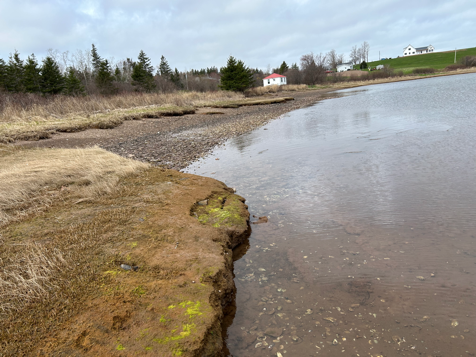 Remnant salt marsh in Tracadie West Arm with dead zone in foreground and marsh erosion back to terrestrial vegetation.
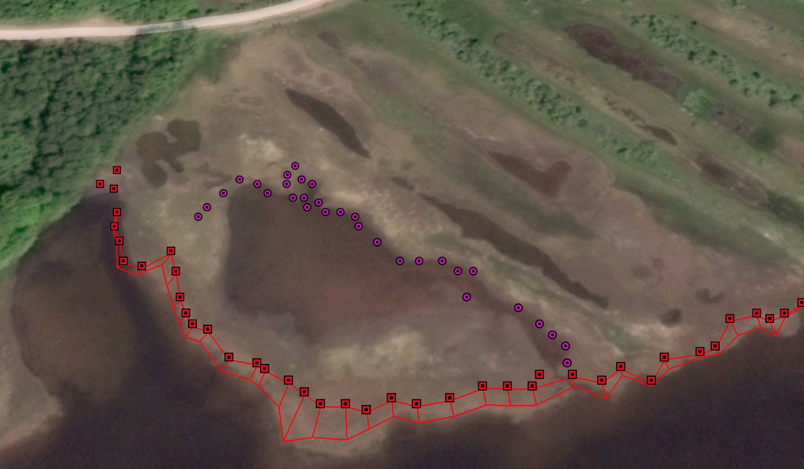 Google Earth image of marsh at Pomquet Provincial Park with polygons mapping the dead zone.
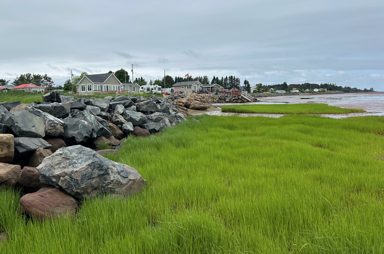
Remnant salt marsh at Northport with an armour wall built across the marsh.
