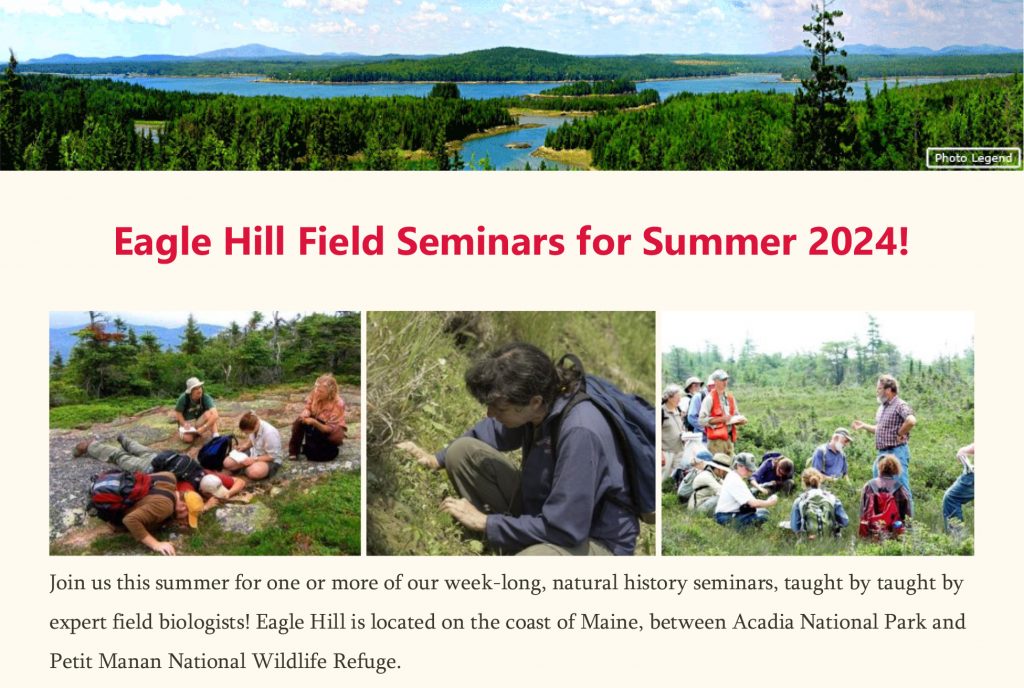
See the full schedule here
See the full schedule here

Our next member’s meeting will be on January 22 in the new year. As has been our tradition for many years, you are invited to share up to 20 of your favourite wild flora photos. Do you have a photo of a Mystery Plant to include? You only need to have Zoom capability and current membership.
If you would like to participate , please read the attached document Slide Presentation Specs 2024 and contact novascotiawildflora@gmail.com
All members will received an email invitation to the Zoom meeting later in January.
Time to renew for 2024! Membership is still $15 individual, $20 family membership. You can pay by e-transfer or cheque to novascotiawildflora@gmail.com
The Echo Foundation will give Nature NS $100,000 if they can raise a minimum of $20 each from 4,205 of their members.
Bob Bancroft’s attached letter shows the importance to all our members (and non member Nature advocates) of this opportunity. Just click on the link below to see the details and context of the offer.
Funding Nature NS is important. We (NSWFS) are founding members of Nature NS, and have an obligation to support this group not only as our Society, but also as individuals. This looks like a good funding opportunity for Nature NS. I urge all our members to support Nature NS with a $ 20.00 donation now to help meet the funding requirement.
Thank you.
Charles Cron President NSWFS.
See this link for their latest doner appeal Take Action for Nature this Winter
Title: Winter Identification of Trees and Woody Plants of the Northern Forest
Instructor: Erika Mitchell
Dates: December 5, 9, 12, 16, and 19, 2023
Times: 7–9PM ET
Tuition Cost: $225
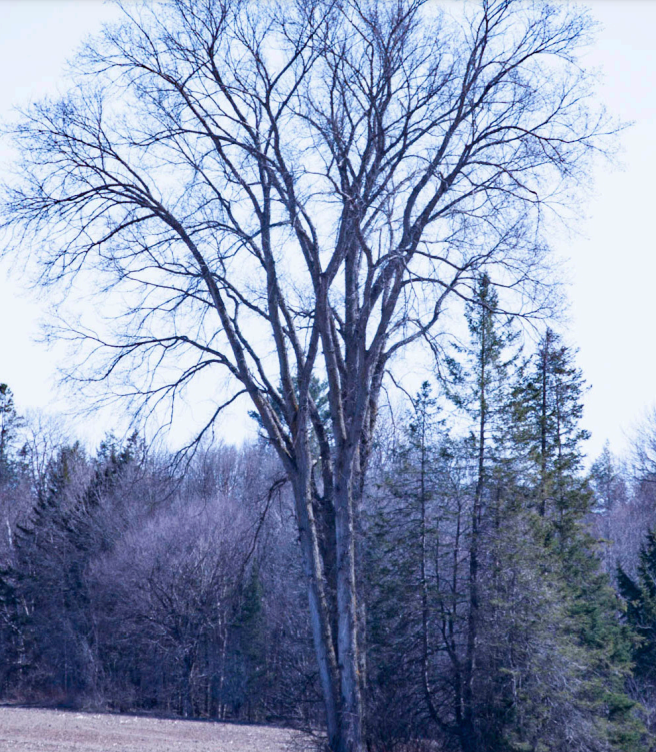 Description: Winter is a wonderful time to get to know the trees and woody plants of the Northern Forest. Without the distractions of summer leaves, we can focus on the more enduring characteristics of the woody members of forest habitats. In this seminar, we will take a wholistic approach to winter plant identification, integrating information of many types, including habitat, growth form, bark, needles and leaf remnants, fruit, twig arrangement, and buds. We will discuss aspects of dendrology, forest ecology, and plant anatomy as they relate to winter identification of woody plants. The seminar will consist of weekly interactive lectures and discussions with field challenge assignments to collect photographic observations of woody plants in nearby forests or parks. We will share these photographic observations through a citizen science course project on iNaturalist. Participants who are not able to access forests in winter may focus their efforts on assisting with identification and curation of the online course project collection.
A full colour flyer is available here. You can register here

The next member’s meeting will be at the Museum of Natural History, downstairs auditorium and via Zoom on Monday Nov 27, 7:30pm.
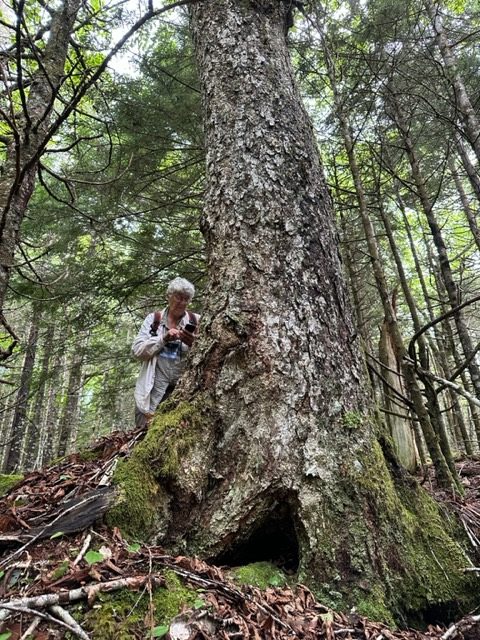
Nina Newington and other citizen scientists are playing a key role in the effort to protect the proposed Goldsmith Lake Wilderness Area in Annapolis County. To date they have identified 27 Species At Risk occurrences (principally lichens), halting logging operations for now. They recently discovered an area of old-growth forest where DNRR maps showed only forest under 80 years old. Nina will present an overview of their explorations and the Save Our Old Forests campaign which recently expanded to include Halifax County.
The Museum is at 1747 Summer Street. Access is through the downstairs door facing the parking lot. Members will be sent a Zoom link prior to the event.

Common Apple Moss (Bartramia pomiformis) Cape Split – Photo Bob Kennedy
Sean Haughian has provided us with this seminal reference on maritime bryophytes. You can find the link here in our reference library on Bryophytes.
Robert R. Ireland of the Museum of Natural Sciences in Ottawa created the comprehensive manual of the Moss Flora of the Maritimes in 1982.
The manual recognizes 381 species, 19 varieties and one form in 135 genera and 43 families. The treatise includes introductory information on structure and life cycle of a moss, collecting and herbarium techniques, collectors of Maritime mosses, identification and methods of study, reference books, and nomenclature and classification. Keys are provided for the genera and species. Each genus is fully described, while the species are briefly described, followed by information on habitat, maritime distribution, range, chromosome number, and relevant remarks. A full plate of black-and-white illustrations is provided for most of the species. A fully illustrated glossary is presented at the back of the book.
Charles Cron will be leading a field trip to Valley View Provincial Park, near Bridgetown on Oct 28 (or 29 if weathered). American beech is the dominant tree and this is one of the best beech forests left in NS.
1hr 15 min from Halifax. Hwy 101 to exit 20: Trunk1 Annapolis county. Turn right to Bridgetown. Then in Bridgetown turn right onto Hampton mountain Road, up hill to the Park at 960 Hampton Mtn. Road. ( Follow Road signs to the Park).
Meet at Park entrance 10:00 hrs. 1-2 hrs . Trail easy,but steep uphill to site.
Anyone interested please register with me By email or phone before Friday 09:00hrs. 902 477 8272 or ccron72@hotmail.com

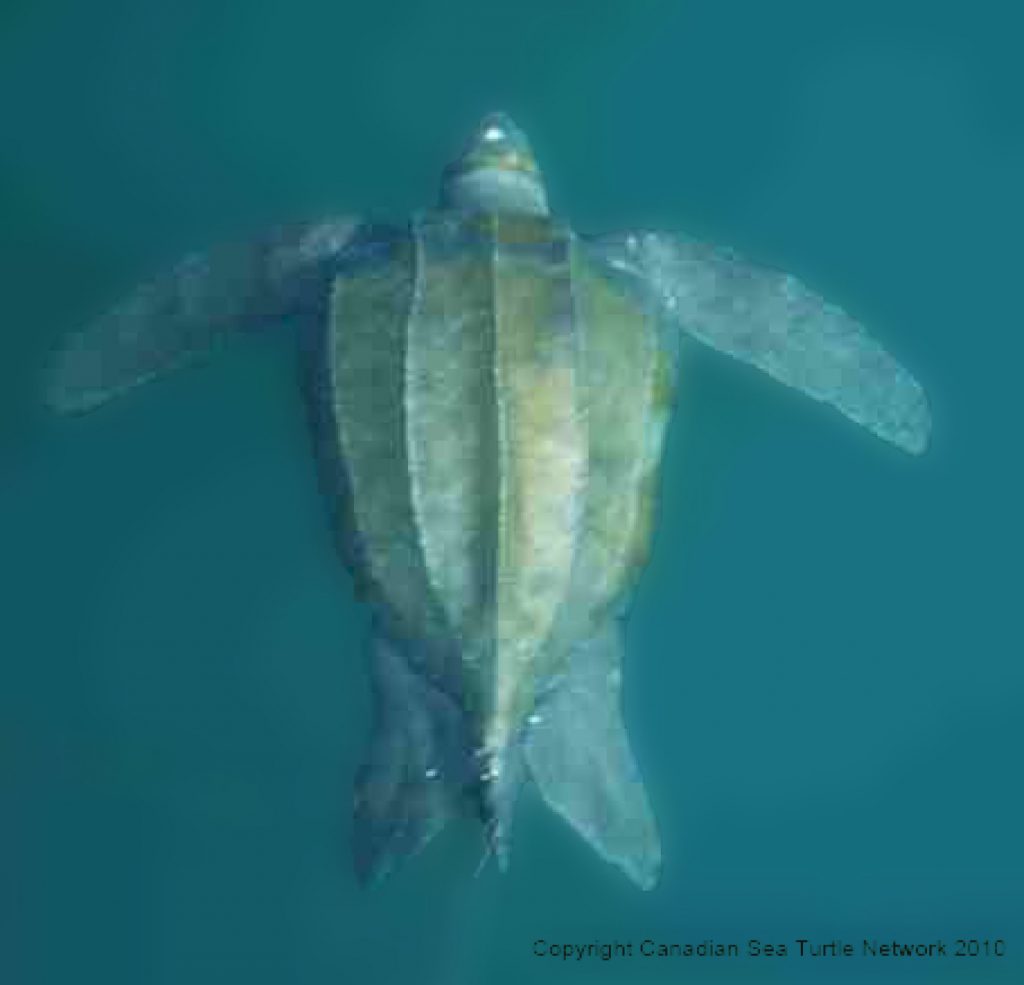 Every fall for the past many years the Sea Turtle Beach Patrol runs a beach patrol program from November 1 to January 31 where they ask volunteers to walk a beach of their choosing once a week looking for cold-stunned hard-shelled sea turtles. “Cold-stunning” is basically hypothermia for sea turtles, which occurs when the water they are in drops to and below 10degrees. Most years they find one or two either dead or almost dead juvenile Green or Kemp Ridley’s sea turtles. By consider the warming oceans and the experiences of our neighbours to the south, they are expecting these stranding events to become more common. Massachusetts for example, has gone from 0 to over 800 cold-stunned turtles in the past 20 years. These turtles, when found alive, require professional warming and monitoring, and sometimes transportation to a rehabilitation Centre. They can’t be put back into the cold ocean.
Historically, the majority of our cold-stunned sea turtles have been found along the Nova Scotia side of the Bay of Fundy, where they have very few beach patrol volunteers. Their goal for this year is to increase their volunteer presence and hopefully get a better idea overall of the conditions that are most likely to bring the sea turtles ashore. So if any of our NSWFS members happen to be walking the shoreline for flora, you may also want to keep a look out for sea turtles.
The Sea Turtle Beach Patrol is hosting a zoom orientation for new members on Oct 24 at 7pm. Interested volunteers can contact beachpatrol@seaturtle.ca for more information.
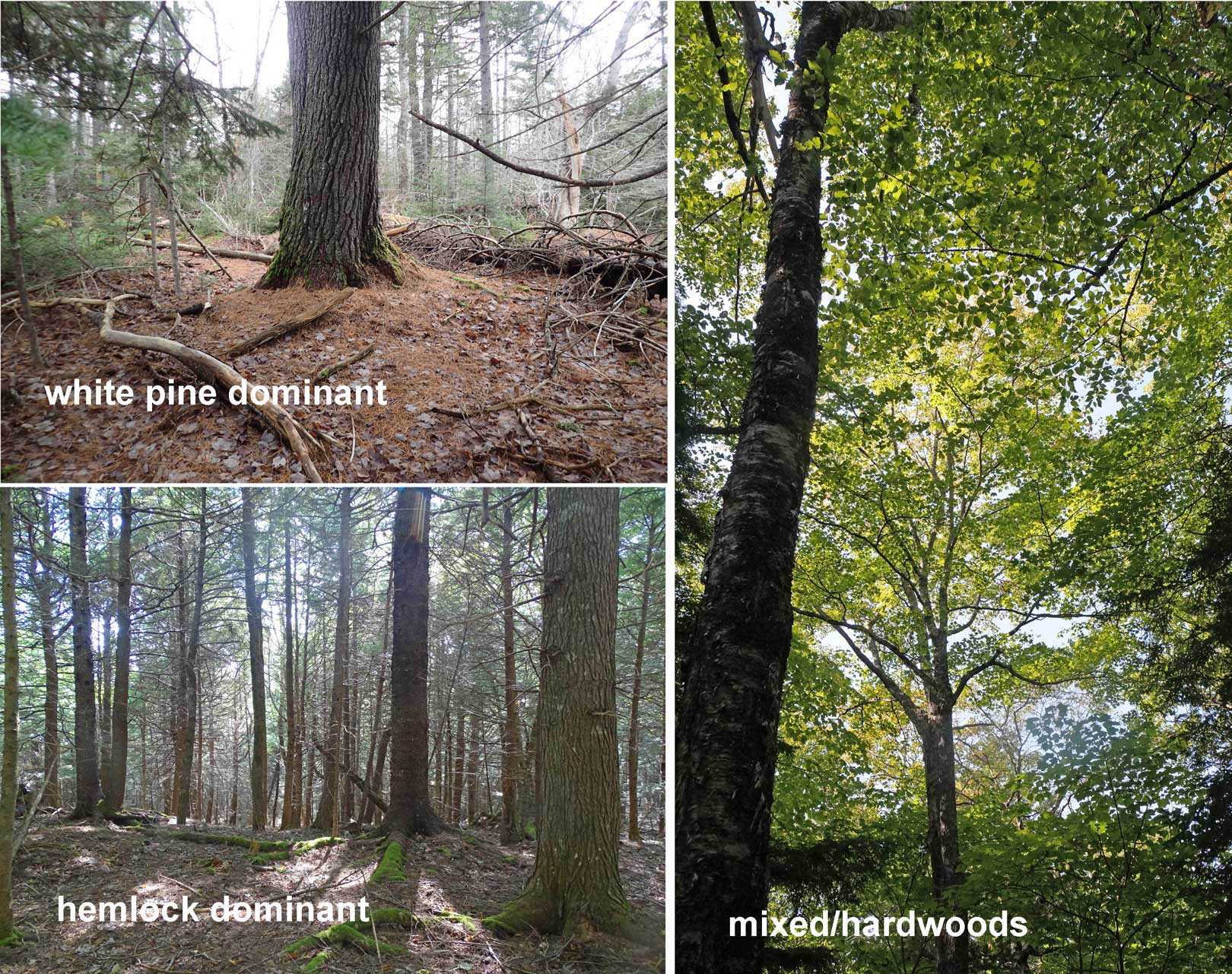
Three types of Old Growth at Sandy Lake
Click on image for larger version
David Patriquin will lead this walk on Sat Oct 14, 2023.
If Saturday look very rainy, it will be on Sunday, Oct 15.
Check this post if uncertain; ‘will update/confirm Fri at noon.
We will meet 1 p,m* in the Big Parking Lot at the end of Smith’s Road and spend approx. 2 hours on a leisurely walk taking us through mixed Acadian Forest.
It’s possible that the gate into the Parking Lot will be closed. If so, park by the road before the gate, and walk in to the Big Parking Lot to meet. See Map below.
*Note change from 11 am (as previouslyposted); this is to reduce likilhood of rain: Weather Forecast for Saturday as of Fri at 1 pm: “Mainly cloudy. 30 percent chance of showers in the morning and early in the afternoon. Fog patches dissipating in the morning. Wind northwest 20 km/h gusting to 40 becoming west 20 gusting to 40 in the afternoon. High 14. UV index 3 or moderate”

The 2023 Continental Mycoblitz is open to anyone who is willing to make scientifically valuable collections of mushrooms – including photography, field notes, and submitting a dried specimen. Any individual or organization can submit their most unique/interesting/exciting collections from the foray week to the project. Mycologists and foray partners will examine each collection and will perform DNA sequencing on thousands of the specimens that are submitted.
For general information about the Mycoblitz see: https://mycota.com/2023-continental-mycoblitz/
Mycologists in the three Maritime Provinces will coordinate the Mycoblitz efforts in our region, to try sequence over 1,000 collections of mushrooms from New Brunswick, Nova Scotia and Prince Edward Island.
If you are located in Nova Scotia please contact Sean Haughian at the Nova Scotia Museum (sean.haughian@novascotia.ca) to get more detailed information about collecting and documenting mushrooms for the Continental Mycoblitz, or to arrange for dropping specimens off at the Museum of Natural History.
In general, materials on this website may be used under Creative Commons license/Attribution-NonCommercial-ShareAlike 2.5.
Please see the About Us page for contact addresses.
 |